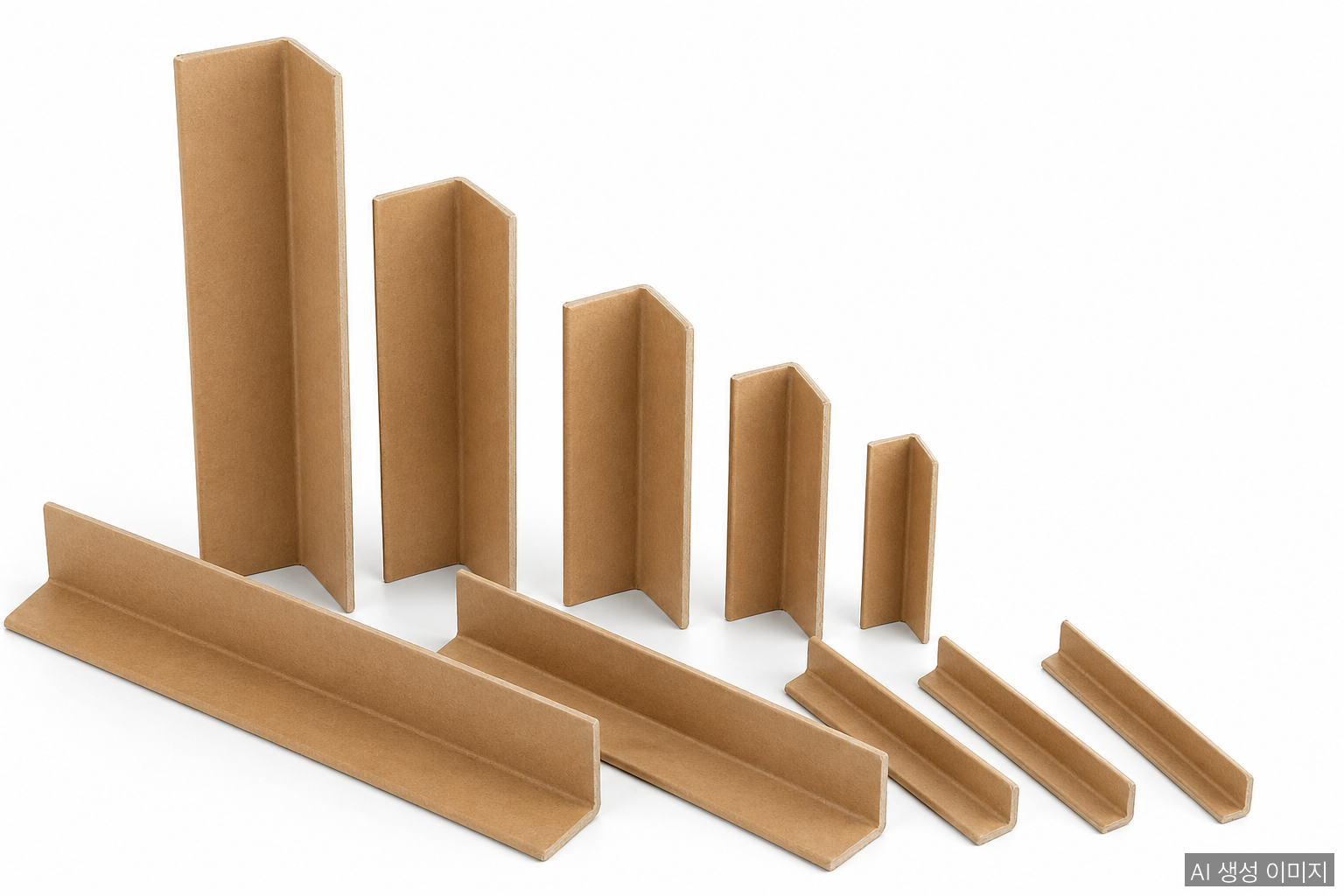
Something stands between your shipment and the damage caused by strapping pressure, stacking loads, and rough handling. It looks like a simple folded strip of paper — but the paper angle board simultaneously solves edge protection and load distribution in one lightweight, recyclable piece.
What Is a Paper Angle Board?
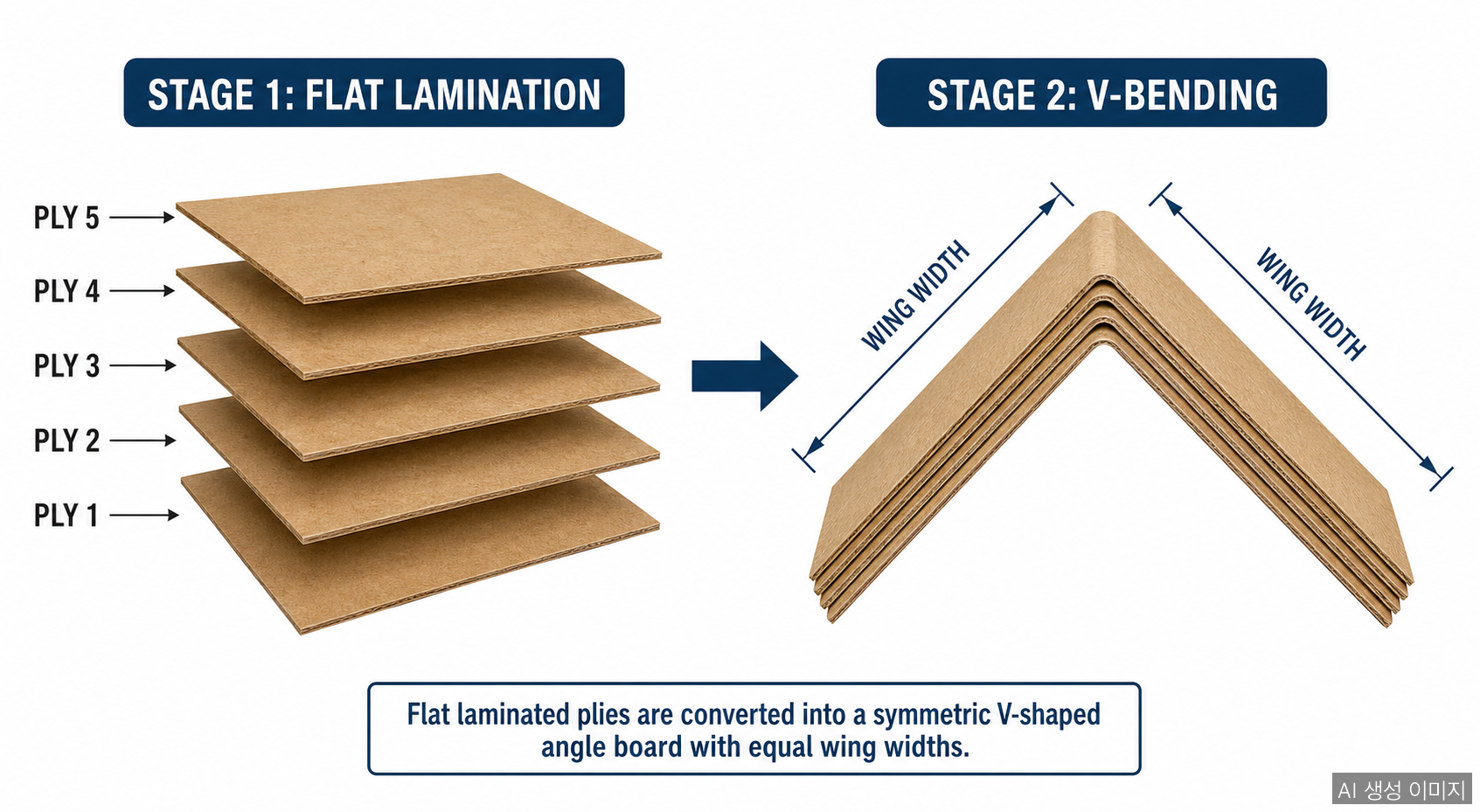
A paper angle board (also called an edge protector, corner board, or angleboard) is a packaging protection component formed by laminating multiple plies of recycled kraft paper with water-based adhesives, then continuously pressing the laminated sheet into a rigid 90-degree L-shaped profile.
In Korean industry the product goes by several names: 앵글보드, 코너보호대, and 엣지가드. The core structure is the same: each paper ply wraps around the previous one in concentric L-shapes, building up wall thickness and compressive strength in the thickness direction.
Main Types
1. Standard
Caliper range of 2–5T. The most common application is box-corner protection and load distribution under pallet strapping bands, preventing the strap from cutting into cardboard edges.
2. Heavy-Duty
Caliper of 6T and above. Used inside the packaging of large appliances, furniture, and building materials to carry vertical stacking loads across multiple pallet tiers.
3. Moisture-Resistant
Standard angle boards with a poly-coating or wax surface treatment. Maintains structural strength in cold-chain logistics, refrigerated storage, and export containers where high humidity would degrade untreated board.
Specifications
| Parameter | Available Range |
|---|---|
| Wing Width | 30×30 mm ~ 150×150 mm |
| Caliper (Thickness) | 2T ~ 9T |
| Length | 100 mm ~ 4,000 mm |
Wing width and caliper are selected based on product weight, impact requirements, and stacking height. Lightweight cartons typically use narrower, thinner boards; heavy or multi-tier loads call for wider wings and higher calipers.
Industry Applications
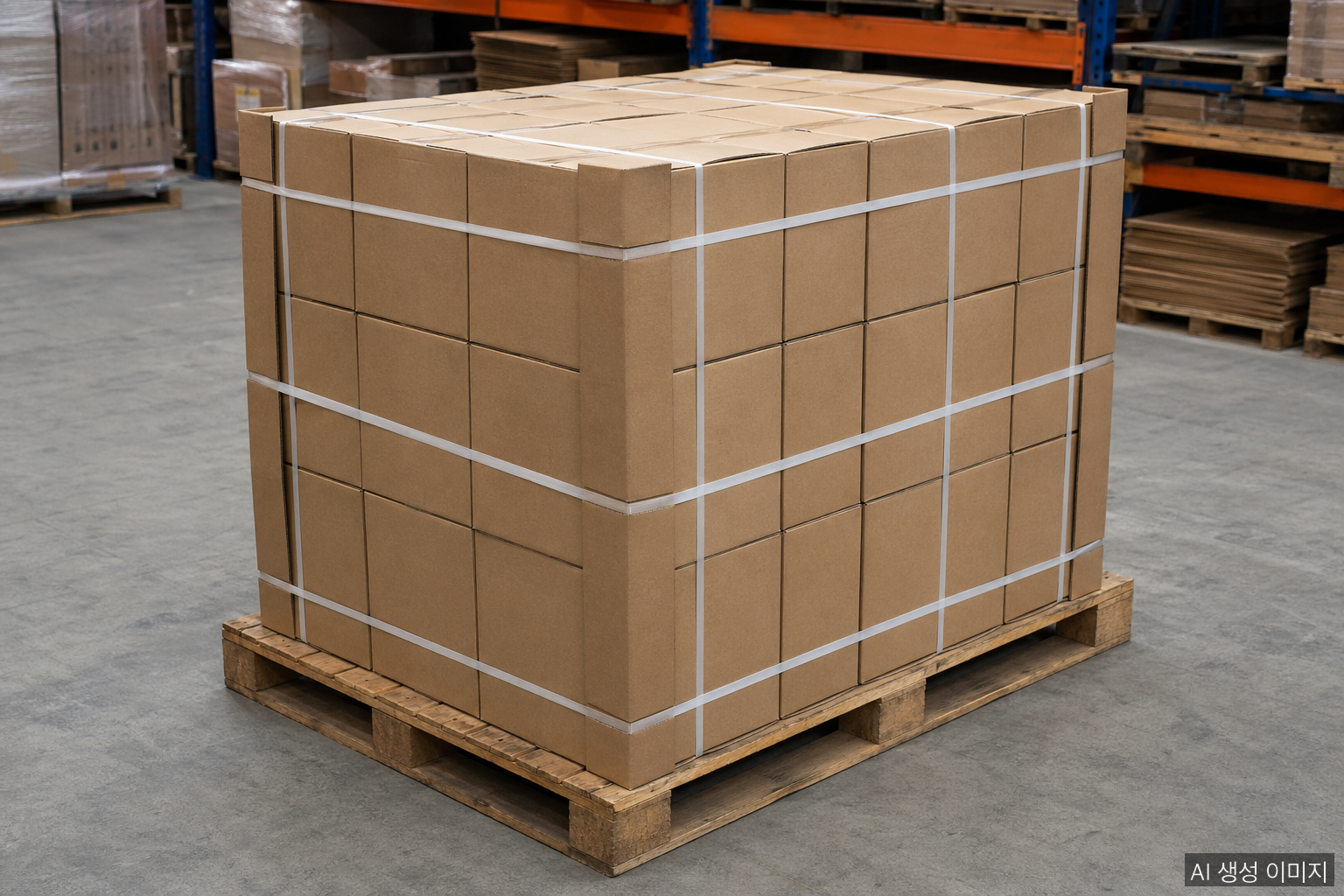
Logistics & Parcel Delivery Without angle boards, strapping bands concentrate stress at cardboard edges, crushing corners. With boards in place, the load spreads across the face of the ply stack, keeping pallets stable and cartons intact.
Home Appliances & Electronics Large appliances — refrigerators, washing machines, flat-panel TVs — use heavy-duty angle boards at the top and bottom interior corners of their packaging to absorb vertical stacking loads in warehouse storage.
Furniture Wood panels, glass sheets, and marble slabs are wrapped with angle boards along their long edges to prevent scratches and chipping during transport.
Food & Beverage Refrigerated pallets use moisture-resistant boards to maintain stability without the board absorbing condensation and losing its strength.
Construction Materials & Steel Rolled or coil-form steel sheets and aluminum panels use L-profile boards to protect edges from nicks and deformation during shipment.
Sustainability
Paper angle boards are manufactured primarily from recycled old corrugated containers (OCC). Compared to plastic corner guards and EPS foam cushioning, they are easy to separate for recycling and are biodegradable — making them a key product in the shift toward ESG-compliant packaging.
Demand for paper-based protective materials is expected to grow steadily as the EU PPWR regulation comes into force and Korea tightens its single-use plastics rules.
Selection Checklist
- Product weight: Light cartons → thinner caliper / Heavy goods → heavy-duty grade
- Wing width: Small boxes → 30–50 mm / Large products → 75 mm and above
- Stacking tiers: Two or more → consider thicker caliper
- Environment: Cold chain or export container → moisture-resistant grade
- Non-standard dimensions: Custom lengths and wing widths available up to 150×150 mm and 4,000 mm
References
- Northrich, “Complete Guide to Paperboard Edge Protectors” (2025)
- Greif, “Edge and Angle Board Product Guide” (2025)
- Korea Paper Manufacturers Association, Corrugated Board Supply Data